

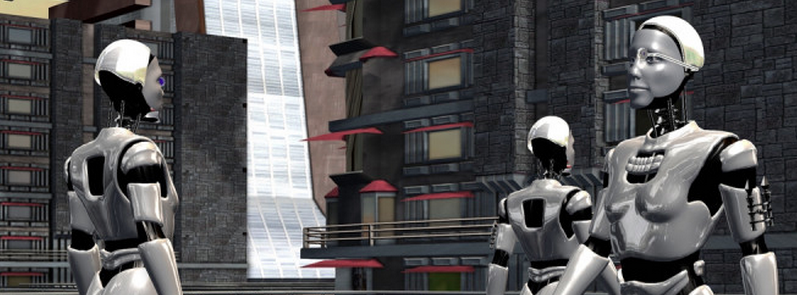
“I think therefore I am.”
In 1637, when he published, The Discourse on Method, René Descartes unleashed a philosophical breakthrough, which later became a fundamental principle that much of modern philosophy now stands upon.
Nearly 400 years later, if a machine says these five powerful words, “I think therefore I am,” does the statement still hold true?
If so, who then is this “I” that is doing the thinking?
In a recent talk, Ray Kurzweil showed the complexity of measuring machine consciousness, “We can’t just ask an entity, ‘Are you conscious?’ because we can ask entities in video games today, and they’ll say, ‘Yes, I’m conscious and I’m angry at you.’ But we don’t believe them because they don’t have the subtle cues that we associate with really having that subjective state. My prediction that computers will pass the Turing test and be indistinguishable from humans by 2029 is that they really will have those convincing cues.”
via Singularity Hub






