

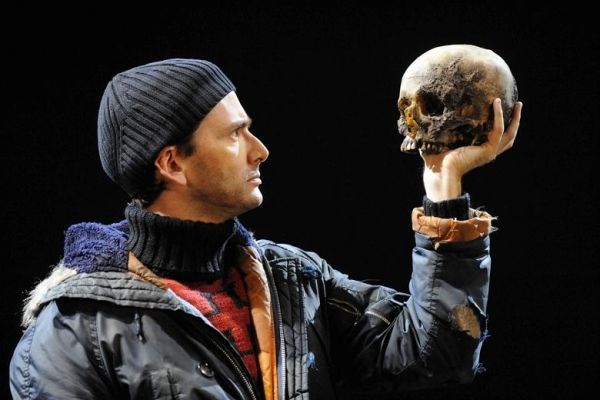
[H]e is silent throughout Hamlet because he is dead (though this condition doesn’t stop Hamlet’s father). Nonetheless, because Yorick appears in one of the most famous scenes of Shakespearean drama, some actors want to play him. So they have bequeathed their skulls on the condition that they be used in performances of Hamlet. Hyperallergic reports:
For example, there’s John Reed, who worked as a stagehand at the Walnut Street Theatre in Philadelphia in the 19th century. As the theater’s website explains, he stated in his will that he “wanted his skull separated from his body, duly prepared, and used to represent the skull of Yorrick in Hamlet. His wish was granted, and the skull is signed by many famous actors of the day who performed in Shakespeare’s play.” Macy Halford in the 2009 article “Skullduggery” for the New Yorker, noted that another man named Juan Potomachi in 1955 “promised two hundred thousand pesos to the Teatro Dramático in Buenos Aires, on the condition that his skull be used as Yorick in any future productions of Hamlet,” a proposition that was apparently accepted.
via Neatorama






