

fresh bytes
Subscribe Now

A programmable 8-bit computer created using traditional embroidery techniques and materials

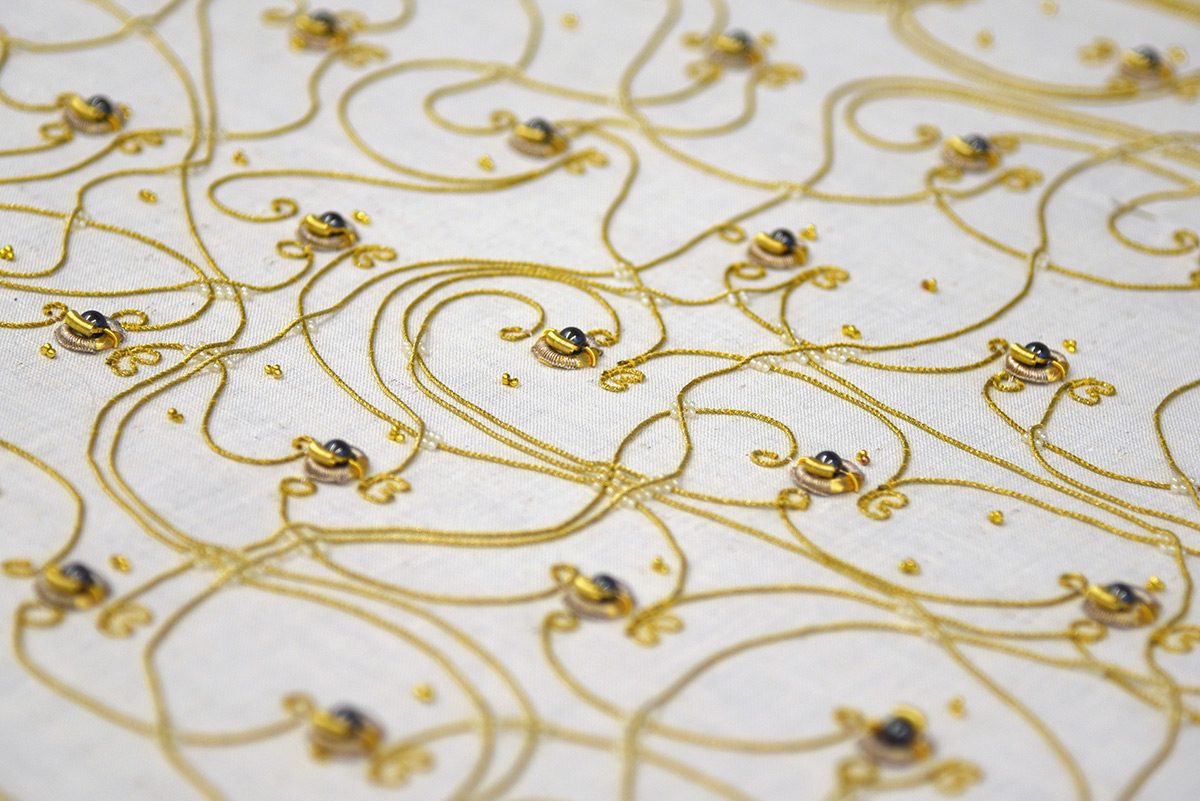
The Embroidered Computer by Irene Posch and Ebru Kurbak doesn’t look like what you might expect when you think of a computer. Instead, the work looks like an elegantly embroidered textile, complete with glass and magnetic beads and a meandering pattern of copper wire. The materials have conductive properties which are arranged in specific patterns to create electronic functions. Gold pieces on top of the magnetic beads flip depending on the program, switching sides as different signals are channeled through the embroidered work.

“Traditionally purely decorative, [the work’s patterns] defines their function,” explained Posch on her website. “They lay bare core digital routines usually hidden in black boxes. Users are invited to interact with the piece in programming the textile to compute for them.” [Source]


Leave a Reply

featured blogs
Nov 14, 2025
Exploring an AI-only world where digital minds build societies while humans lurk outside the looking glass....

featured news

Microchip Unveils First 3 nm PCIe® Gen 6 Switch to Power Modern AI Infrastructure

Sponsored by Microchip

AI systems are starving for bandwidth. Microchip’s 3 nm Switchtec™ Gen 6 PCIe® switches deliver up to 160 lanes, lower power, and CNSA-compliant security—built for the future of AI and cloud infrastructure.

Click here to read more

featured chalk talk

New Infineon Microcontrollers offering PSOC™ HVMS + Vector Microsar Software
Sponsored by Infineon
In this episode of Chalk Talk, Marcelo Williams Silva from Infineon and Amelia Dalton explore how electrification, autonomy and connectivity are pushing a need for low power microcontroller solutions for automotive applications. They also investigate the benefits that the Infineon PSOC™ 4 HVMS MCUs bring to these kinds of designs, and how you can take advantage of Infineon’s robust automotive ecosystem of solutions for your next design. 
Nov 13, 2025
44,021 views



