

fresh bytes
Subscribe Now

3D printing in gel shows how scientists could print human organs

Screen_Shot_2015-09-29_at_9.53.02_PM.png

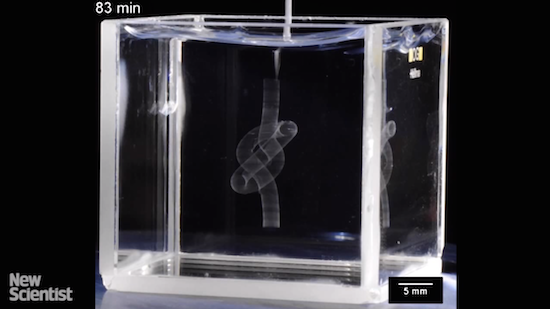
While scientists have had success in the past printing structures like “bionic ears,” a clear path to making functional internal organs and tissue hasn’t really emerged. However, researchers at the University of Florida in Gainesville have developed a way of printing complex objects in gel, a method that could help pave the way to 3D-printed organs in the future.

The hard thing about printing intricate organic structures like blood vessels and complicated organs is that they collapse under their own weight before they solidify. The gel here, which is made of an acrylic acid polymer, acts as a scaffold to hold the structure in place during the printing process. That approach has already allowed the team to print with organic materials — and even make a replica of a human brain.
via The Verge


Continue reading 

Leave a Reply

featured blogs
Feb 6, 2026
In which we meet a super-sized Arduino Uno that is making me drool with desire....

featured chalk talk

Democratizing Centimeter Level GNSS Precision for All Applications
Sponsored by Mouser Electronics and u-blox
In this episode of Chalk Talk, Arnaud Le Lannic from u-blox and Amelia Dalton explore the benefits of the ZED-X20P, all-band high precision GNSS module and the ZED-F20P triple-band high precision GNSS module from u-blox. They also investigate the roles that correction source and centimeter-level positioning services play in these types of designs, and how you can improve your next design with high precision position solutions from u-blox.
Jan 28, 2026
14,088 views



