I don’t like change. I know I’m starting to sound like an old codger, but that’s OK because I am an old codger (I know the secret handshake and I have the ceremonial undergarments T-Shirt to prove it). For example, I remember going to the Design Automation Conference (DAC) year after year throughout the 1980s. The same companies were there each time, but it … Read More → "Three Companies, One Toolchain: The Rise of TASKING 3.0"
I’m feeling more than a little existential at the moment. Unfortunately, I don’t think there’s a cream for that. I was going to say, “Don’t worry, it’s not catching.” However, the more I think about what I’m about to tell you, the more I fear we might discover that it is.
The idea that bumblebees shouldn’t be able to fly … Read More → "Bumblebees Can’t Fly, and Humans Can’t Exist (I Have Proof)"
There are many difficult-to-answer questions. For example: At what point does ‘a few’ become ‘several’ When does ‘soon’ become ‘never’? How long will this take? (How long have you got?) When will it be done? (Define ‘done’?) Is it backward compatible? (With what, exactly?) How many devices around the world are running code no one fully understands? How many engineers are currently Googling the same error message? Why are … Read More → "Well, Fork Me with a Dining Philosophers Problem (or The Best Way to Debug Embedded Systems)"
When conversations turn to semiconductor foundries, they typically begin with leading-edge process nodes and the race toward ever-smaller geometries. However, although nanometer bragging rights dominate headlines, something quieter—and arguably more consequential—is unfolding elsewhere in the industry.
The reason for my newfound perspective is that I was just chatting with James Prior, who is a Marketing Executive at < … Read More → "Physical AI at Foundry Scale"
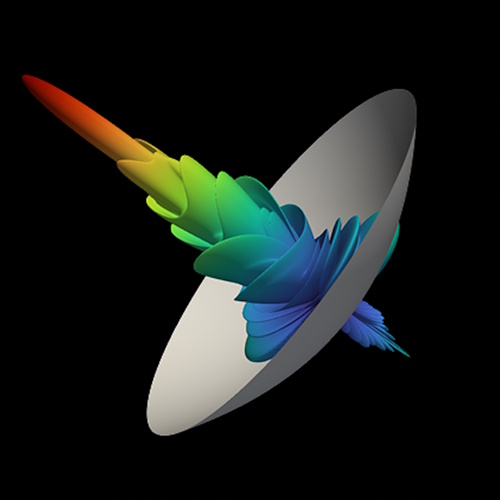
This is going to be a story in three parts. If we’re lucky, they’ll be related, but I’m not making any promises. Let’s start by discussing one of the things I know nothing about. Yes, I know this is a long (and ever-growing) list, but in this case, I’m thinking about the design and analysis of antennas and radar systems.
The closest … Read More → "Beyond the Spherical Chicken: Rewriting Maxwell for Modern Machines"
In this week’s podcast, we’re exploring the three trends poised to redefine how we design, simulate, and deploy complex systems in 2026 and beyond: agentic AI and the model context protocol for tool integration, hybrid terrestrial and non‑terrestrial wireless networks, and moving AI onto embedded hardware using virtual sensing and reduced‑order models. My guests, Seth DeLand and Houman Zarrinkoub from MathWorks, and I … Read More → "The Trifecta of 2026: AI Agents, Hybrid Wireless, and the Future of Embedded Engineering"