



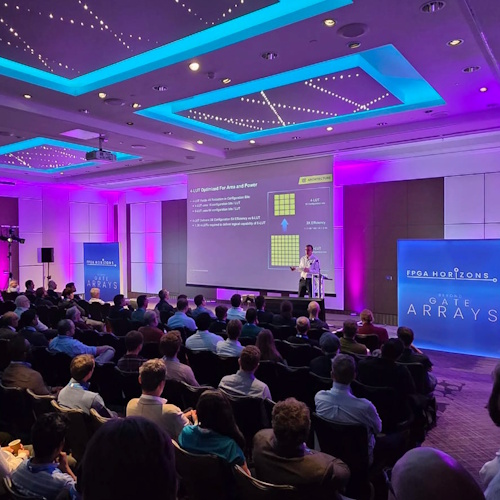
Just in case it has escaped your attention, I want to make sure you are aware of the forthcoming FPGA Horizons US East Conference and Exhibition, which will take place April 29-30, 2026. If you want to learn more about this auspicious event, which costs a modest $200 for the entire 2-day extravaganza, then read on…
…but first, as an aside (I thought I’d better get this out of the way early on), Tom Swift is the main character in a long-running series of 100+ science fiction adventure novels. These started in 1910 with Tom Swift and His Motor Cycle, and continued until 1971 with Tom Swift and the Galaxy Ghosts.
Much like the young Max I aspired to be, Tom is a brilliant, energetic young inventor who repeatedly designs cutting-edge technologies and then uses them to solve problems, foil villains, explore new frontiers, or rescue people—often all at once (he’s a bit of a multitasker, just like me).
Those books became notorious for ending dialogue with “said Tom,” followed by an (often awkward or redundant) adverb. This form of wordplay, based on overusing adverbial dialogue tags, is now known as “Tom Swifties.” Later generations noticed this and turned it into a comic wordplay genre, where the adverb is a pun on the sentence itself. A couple of classic examples are as follows:
- “I need a pencil sharpener,” said Tom dully.
- “The power just failed,” said Tom darkly.
- “My signal is weak,” said Tom faintly.
- “I dropped my toothpaste,” said Tom crestfallenly.
- “There’s nothing like a vacuum,” said Tom emptily.
Hence the title of this column. Now, back to FPGAs.
Have you ever attended a technical conference and wondered who’s “behind the curtain” pulling the strings? I know I have. Well, in this case, when we pull on the cords, the curtains part to reveal my old friend, Adam Taylor.
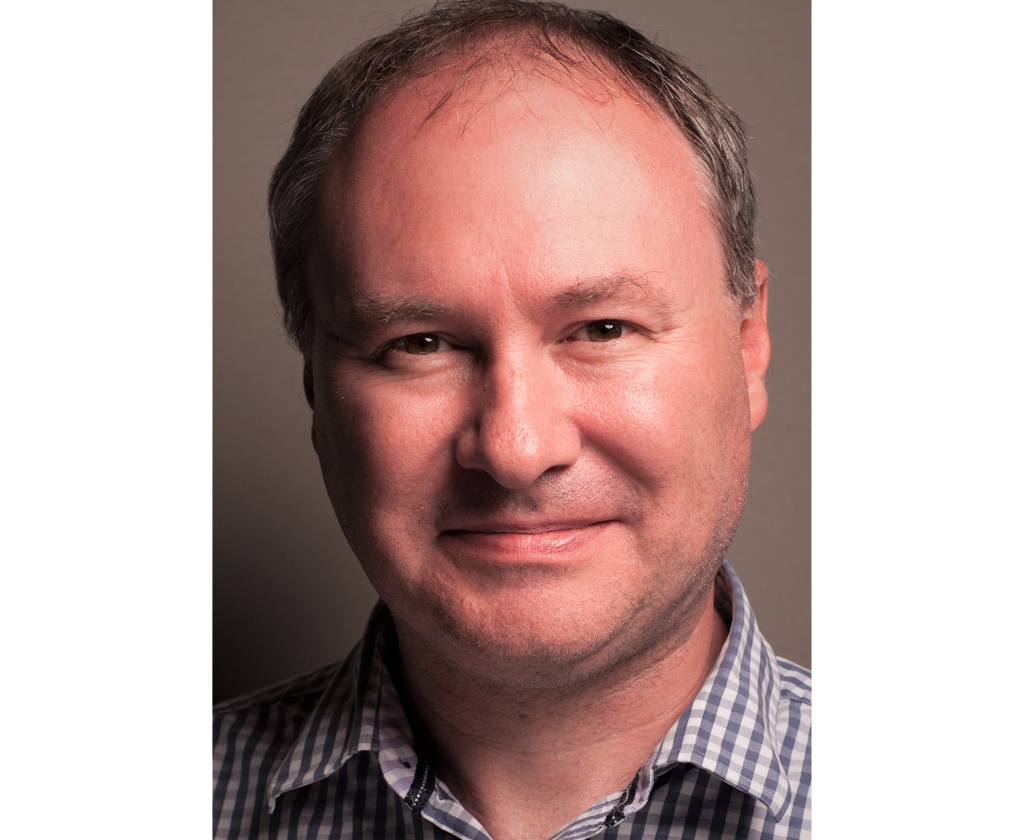
Meet my friend, Adam Taylor
If you’ve spent any time at all in FPGA space (where no one can hear you scream), you’ve almost certainly encountered Adam in one way or another—perhaps through his legendary MicroZed Chronicles, which racked up some 30 million views before he stopped keeping track.
As you may recall from my There’s More Than One Way to Become an Engineer column, Adam and I both hail from Sheffield, England, and we both attended what is now Sheffield Hallam University. Adam is 20 years my junior, which, as you’re no doubt thinking, means I’ve had two extra decades to mature and hone my engineering skills. Quite right. Well spotted.
On the other hand, by the time Adam graced the august Hallam halls of our alma mater, he had access to training on components such as FPGAs and on technologies such as digital signal processing (DSP). When I was a lad, we didn’t even know how to spell DSP.
As I noted in the aforementioned More Than One Way column, on leaving university, Adam’s first job was with a defense contractor, using Xilinx FPGAs as a platform to develop and implement DSP algorithms for radar systems. Adam’s next position involved using FPGAs to develop control systems for nuclear submarines. This is where he honed his skills in creating high-reliability, mission-critical, safety-critical, radiation- tolerant designs.
Adam also used FPGAs to implement high-speed cryptographic algorithms and high-performance image processing algorithms. All this experience stood him in good stead when he eventually moved into the aerospace industry and began creating FPGA- based designs for space applications, such as satellites and deep-space probes.
Over the years, Adam and I have collaborated on various projects, including our blog series, How to Get an Engineering Job and Keep It, parts 1, 2, and 3. We’ve also spoken at many of the same conferences, including the Embedded Systems Conference (ESC) in America and the FPGA Forum in Norway.
In 2014, Adam founded ADIUVO Engineering and Training. Since that time, ADIUVO has built an enviable reputation for high-reliability, mission-critical, safety-critical, and radiation-tolerant designs. As a result, Adam now spends a lot of time jetting around the world, contracting for organizations like NASA and the European Space Agency (ESA).
Suffice it to say that if someone has a fighter aircraft that’s grounded because of an FPGA-related issue, or the members of a team designing a satellite or space probe are pulling their hair out because an FPGA-based glitch has raised its ugly head, then Adam and his colleagues are the folks who are called in to identify and fix the problem.
I thought Adam was busy enough. But the past year has seen a flurry of additional activity that has left my head spinning. At the beginning of 2025, for example, there were no FPGA-specific conferences or journals targeted at designers and developers in the UK or the US.
Thinking about it, the last truly FPGA-centric publication I remember was the quarterly Xilinx Xcell Journal, whose final issue appeared in Q1 2016. After that, there was a long and rather conspicuous silence until Adam formed a new company, ADIUVO Events. One of its first undertakings was the launch of a new high-quality publication: FPGA Horizons Journal.
This journal is free to read with no email or sign-in required, and each issue can be downloaded as a PDF via the icon below the cover. Adam tells me that the first issue (Q3 2025) has already seen 63,264 downloads, while the second issue (Q1 2026) has clocked up 47,791 downloads, and the quarter is still young.
FPGA Horizons Journal is primarily an online publication. However, print issues are also available at FPGA Horizons Conferences. “Wait, what?” I hear you cry. You shouldn’t be surprised, because I talked about this very thing in my New FPGA Conference and Exhibition Coming to the UK and USA column, which was unleashed upon the collective consciousness in August 2025.
Admittedly, that column was posted before the inaugural FPGA Horizons London 2025 event, which, by all accounts, was a resounding success (I was planning on attending, but it was not to be). In fact, demand was so high that Adam (well, his company, ADIUVO Events) had to turn away several exhibitors and more than 200 would-be attendees because there was, quite literally, “no more room at the inn.”
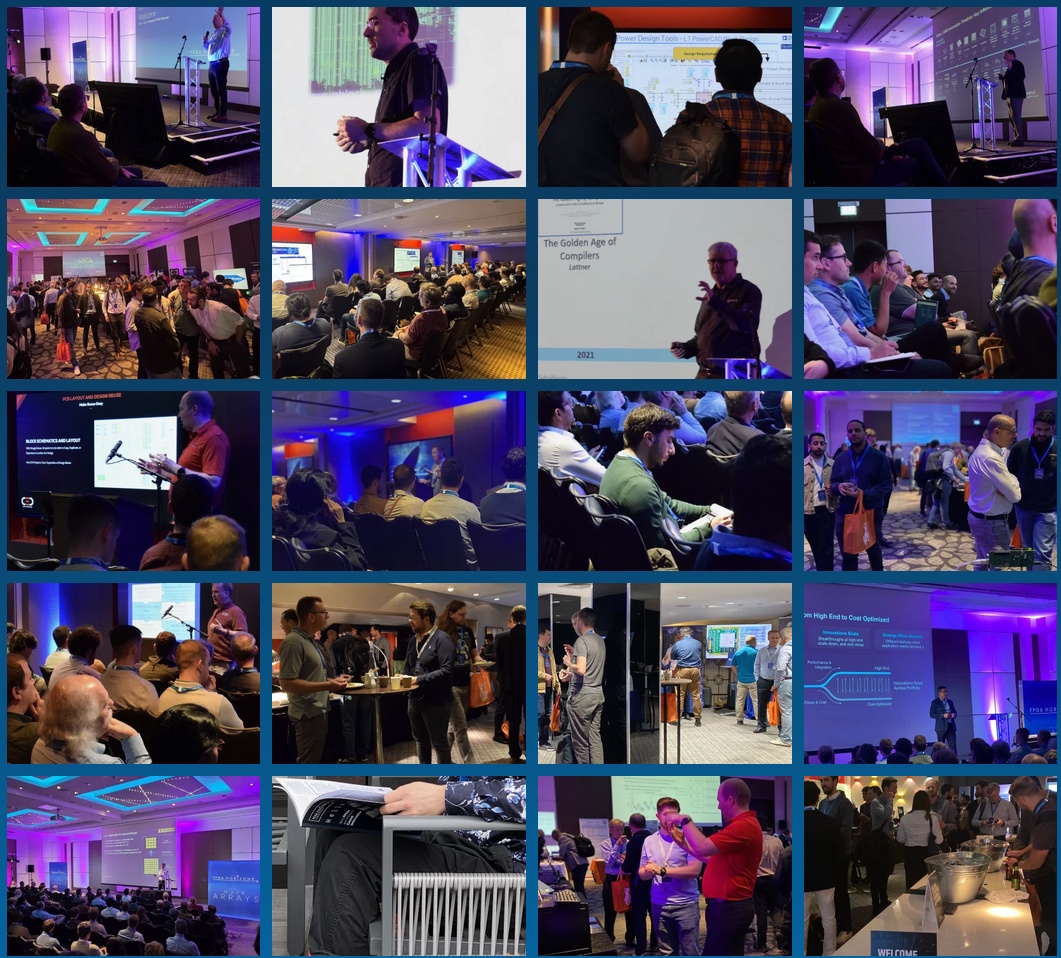
A few images from the FPGA Horizons London 2025 conference and exhibition.
But wait, there’s more. While on a Zoom call with Adam earlier today, I was amazed to learn that he’s also the CEO of two relatively recent AI-centric startups. The first, Certiqo, tackles one of the thorniest and most anxiety-inducing problems in modern digital design: How do you prove that your code actually does what you think it does?
Rather than using AI to generate code (which many companies still distrust), Certiqo flips the problem on its head by using AI to perform requirements-driven verification. You feed it your stated requirements along with your existing RTL (or even C, Python, or other languages), and it tells you—explicitly—whether the implementation truly satisfies those requirements, and why. Even more intriguingly, it can flag logic that has no corresponding requirement at all, a capability with obvious implications for safety-critical systems, security audits, and regulatory compliance.
Backed by European Space Agency funding and demonstrated live on FPGAs, Certiqo feels less like hype-driven “AI for EDA” and more like a genuinely practical tool designers may soon wonder how they ever lived without.
Adam’s other new venture, Setanta Space, is firmly aimed beyond Earth’s atmosphere, combining his long-standing expertise in space-qualified FPGAs with AI techniques designed for autonomous, resilient spacecraft operation. This company is focused on “useful AI” rather than buzzword AI—things like anomaly detection from telemetry, predictive failure analysis, autonomous navigation, and on-board decision-making that must work reliably in harsh radiation environments where a reset button simply doesn’t exist.
One particularly compelling area Setanta Space is exploring is space situational awareness: enabling spacecraft to understand what’s happening around them and react in real time, potentially with the assistance of companion satellites. It’s an approach that reflects a broader shift in the space industry—from ground-controlled assets to intelligent, self-reliant systems—and Setanta Space is positioning itself squarely at the intersection of AI, FPGAs, and mission-critical space hardware.
The main reason I’m waffling about this here is that all three companies—ADIUVO Engineering and Training, Certiqo, and Setanta Space—will be presenting at the forthcoming FPGA Horizons US East 2026 Conference and Exhibition, April 29-30, 2026, collocated with the the PCB EAST 2026 Conference and Exhibition at the DCU Convention Center, 50 Foster Street, Worcester, MA 01608.
It doesn’t matter if you’re a system architect, an engineer in the trenches, or a manager who dons the undergarments of authority and strides the corridors of power. If you have any interest whatsoever in the world of FPGAs (components, design and verification tools, tips, tricks, and technologies), then FPGA Horizons US East 2026 is the place to “see and be seen.”
There’s already an Awesome Agenda, a Sumptuous Speaker lineup, and a Prominent Partner rollcall, with more coming online as we speak. Suffice it to say that all the key FPGA players will be there.
The amazing thing to me is the modest price. One can attend the entire 2-day FPGA Horizons Conference for only $200, which includes proceedings, access to the exhibits, free Wednesday sessions, Wednesday evening reception, and lunch on registered days.
The only problem, as far as I can see, is that—as for the UK event—there’s a limit on the allowable number of attendees. Which prompts me to say that this would be a great time to register before all the good seats are sold.
In conclusion, this really is going to be the best FPGA conference in the USA ever. The people, the content, and the energy are all lining up beautifully, and I can’t wait to see how it unfolds. If you’re even half as excited about FPGAs as I am, dare I hope to see you in Worcester this April (said Max, expectantly).






