



I never used to think about power when I was younger. Actually, there are many things I didn’t think about when I was younger (and I’m getting even better at not thinking about things as I grow older), but power was certainly around the top of the list. When I was a kid in the UK circa the 1960s, most things (televisions, radios) plugged into the wall. The most common battery-powered items were torches (flashlights), portable radios (which were a big deal at the time), toys, and cameras.
As an aside (I think it’s probably best to get this out of the way before we plunge into the fray), Battersea Power Station is a decommissioned coal-fired power station located on the south bank of the River Thames in the London borough of Wandsworth. Construction began in 1929, resulting in one of the world’s largest brick buildings, notable for its original Art Deco interior fittings and decor.
The decommissioning process commenced in 1975. One thing that sticks out in my mind is the huge inflatable pig balloon, nicknamed “Algie,” used on the cover of Pink Floyd’s 1977 album Animals. This was photographed strung between two of the station’s huge chimneys in December 1976. During the shoot, the pig broke free from its moorings and wandered into Heathrow Airport’s airspace (can you imagine looking out of your airplane window and seeing a gigantic pig flying by?).
The album loosely draws on George Orwell’s Animal Farm, with dogs as ruthless business figures, pigs as corrupt leaders, and sheep as the passive masses. This was a bleak, confrontational social critique, far less dreamy than earlier Floyd. As a result, when Animals was first released, many critics found it to be too dark, cynical, and angry. Over time, however, it’s undergone serious critical reappraisal and is now often ranked among Pink Floyd’s best albums.
The reason I’m waffling on about the Battersea Power Station here is that I was just introduced to a very interesting video showing how this storied facility has been transformed into a vibrant mixed-use destination featuring shops, restaurants, offices (including Apple’s UK headquarters), entertainment venues, and luxury apartments. But we digress…
Returning to the 1960s, the main types of batteries used in household devices in those days of yore were zinc-carbon and alkaline disposables. When it came time to replace them, people simply tossed them away with little regard for environmental impact.
Rechargeables came into existence earlier than you might think, especially if we consider the lead-acid battery used in early cars, which were invented in 1859 (yes, Victorian era!). In the non-car context, nickel–cadmium (NiCd) batteries were commercialized in the 1940s and 1950s, but they were expensive, had low capacity, and suffered from the infamous “memory effect,” so they were mostly used in industrial gear or niche devices.
Early NiCd rechargeable batteries typically required dedicated chargers, and these were often specific to battery sizes and types. They didn’t use any smart electronics—just basic current limiting—and the recharging process could take 10+ hours.
The NiCd era persisted until the end of the 1980s. From the 1990s into the 2000s, nickel–metal hydride (NiMH) batteries replaced NiCd in many applications. These offered higher capacity and less memory effect, and AA/AAA rechargeables became increasingly common. Like their NiCd predecessors, early NiMH batteries also required dedicated chargers—only this time, the charging process was a little subtler, making “smart” charging electronics far more important.
The 2000s saw the beginning of the lithium-ion (Li-ion) revolution, which continues to this day. These lithium-based batteries delivered a huge leap in energy density, recharge speed, and convenience, especially when combined with smart charging electronics built directly into the device and the now-ubiquitous USB-C standard.
I love my sleek Apple TV+ controller. I also love that it tells me (via the TV screen) when it feels it needs to be recharged—which is a relatively rare event, now that I think about it—and that I can charge it with any of the freestanding USB-C cables festooned around the house.
Having said all this, while devices like phones, tablets, laptops, and wearables are ~100% rechargeable with built-in batteries, roughly 60–70% of portable gadgets like controllers, cameras, toys, remotes, and flashlights still use disposable batteries (AA, AAA, coin cells, etc.).
Of course, all this convenience comes at a cost. The lithium-ion batteries that power our modern marvels rely on mining operations that are far from environmentally benign, involving significant water consumption, habitat disruption, and chemical processing. Meanwhile, the humble disposable batteries we continue to use in our remotes and sensors may seem innocuous, but when discarded in their millions (or billions), they contribute to a growing mountain of waste, with metals and electrolytes that can leach into soil and groundwater (and us) over time.
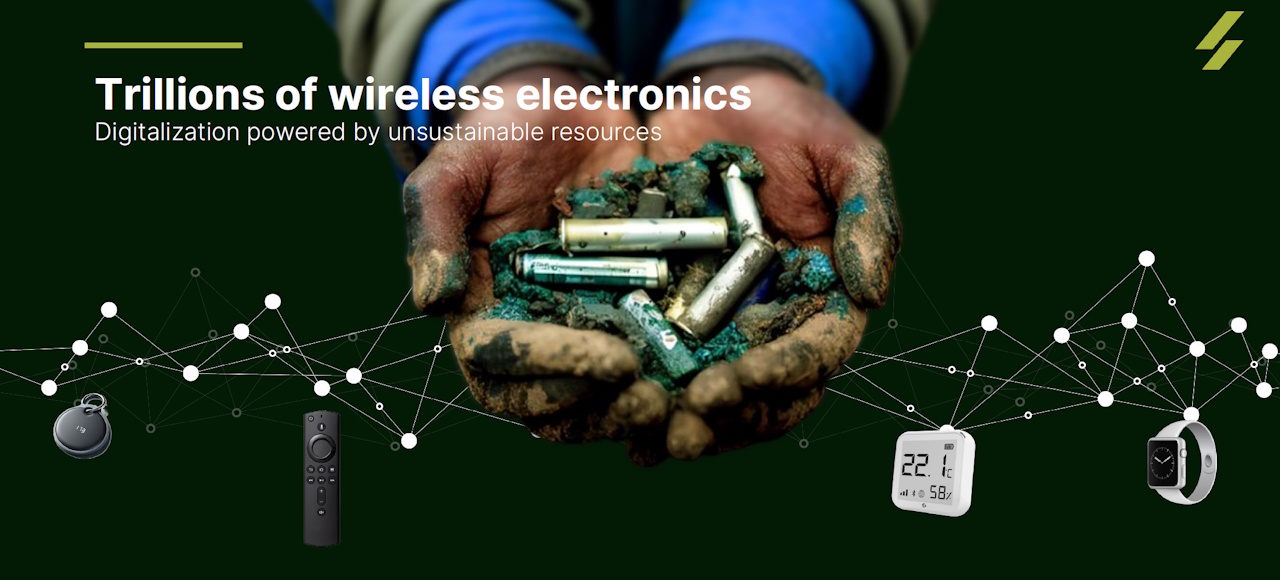
An image that says it all (Source: Linga Energy)
It’s also frustrating that, while recycling options do exist, they’re far from universal or frictionless. In practice, a large proportion of batteries—especially disposable ones—still end up in landfills, not because there’s nowhere to take them, but because the system simply isn’t convenient enough for most people to bother. (In my case, everyone in the building where I rent my office brings their old batteries to me, and every so often I make a pilgrimage to the local municipal recycling center.)
But that’s not what I wanted to tell you about…
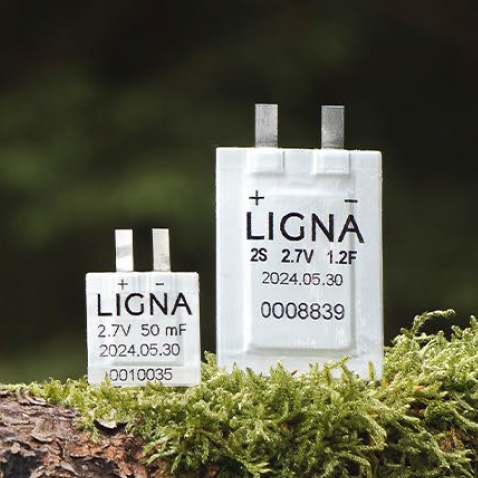
I was just chatting with John Söderström, who is the Marketing Director at LIGNA Energy. The company name comes from the Latin ligna, meaning wood as a material (woods as a place would be silvae). This is because when the company was founded in 2017 as a spin-off from Linköping University in Sweden, the goal was to create gigantic, environmentally friendly wood-based batteries to store energy from renewable sources such as solar farms and wind parks. Later, the company pivoted from large container-sized wood batteries into small supercapacitors.
It may be that you are saying to yourself, “I’ve heard about supercapacitors, but what exactly are they and why should I care?” Well, in simple terms, a supercapacitor sits somewhere between a traditional capacitor and a battery. It can’t store as much energy as a battery, but it can charge and discharge extremely quickly, deliver high bursts of current, and survive hundreds of thousands—or even millions—of charge cycles. Where a battery is all about energy storage, a supercapacitor is all about power delivery and longevity.
One common use of these devices is alongside batteries. Many IoT devices spend most of their lives asleep, sipping minuscule amounts of power, only to wake up occasionally and transmit data. Unfortunately, those brief wireless transmissions can demand surprisingly large bursts of current, which stress small batteries and shorten their lifespan. By pairing a battery with a supercapacitor, the capacitor can handle these peak loads while the battery supplies the steady baseline energy. The result is reduced battery stress, longer operational life, and, in some cases, the ability to use a smaller and cheaper battery in the first place.
Even more intriguing is the possibility of eliminating the battery altogether. As anyone who has ever managed a large building knows, deploying thousands of sensors quickly becomes a maintenance headache when each one has a battery that eventually needs replacing. Ligna is addressing this with ultra-thin, credit-card-sized devices that combine energy harvesting—typically from indoor light—with supercapacitor storage. The capacitor slowly accumulates energy and then powers the sensor and its occasional wireless transmissions. No battery. No replacement cycle. The result is a maintenance-free architecture that transforms indoor sensing from an ongoing operational burden into something that can scale almost invisibly as part of the building infrastructure.
All of this would be interesting enough on its own, but what really sets Ligna apart is what their devices are made from and—more importantly—what they are not made from. Ligna’s S-Power series supercapacitors are based on a bio-derived material stack that avoids many of the problematic substances found in conventional energy storage solutions. According to the company, these devices contain no PFAS (“forever chemicals”) and no heavy metals. Instead, they rely primarily on materials such as aluminum, carbon derived from biomass, paper separators, and organic electrolytes. The result is a component that is not only ultra-thin but also designed with end-of-life in
mind, with a large proportion of its materials recoverable through recycling or energy recovery processes.
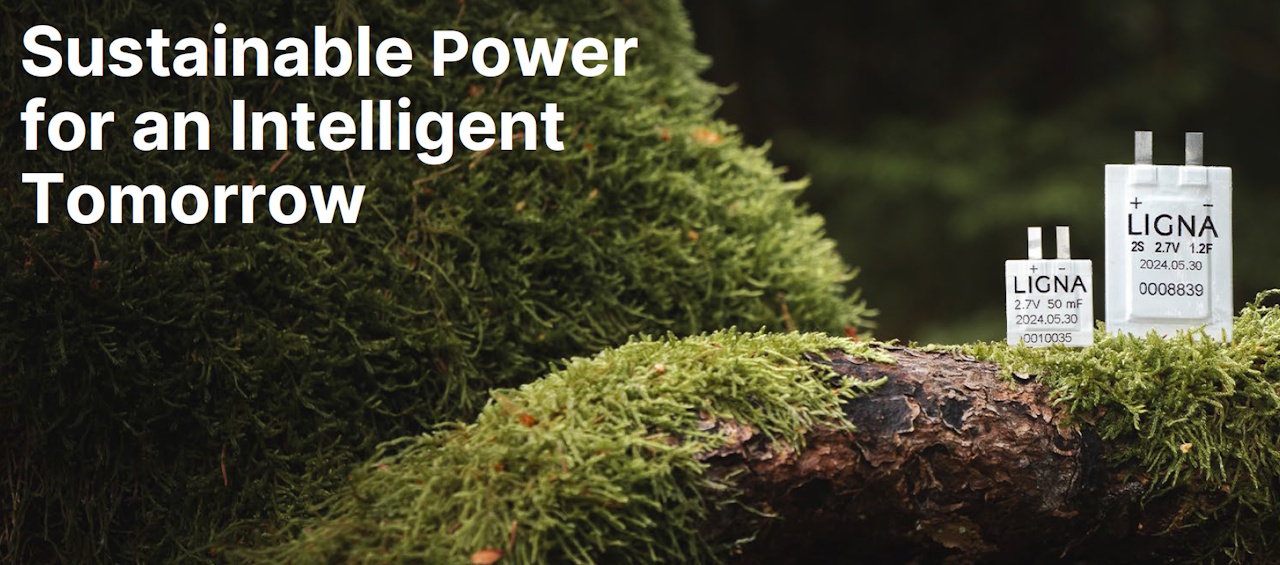
Meet the world’s thinnest and most eco-friendly supercapacitors (Source:Ligna Energy)
The environmental implications are striking. Traditional batteries often involve complex chemistries and resource-intensive supply chains, while Ligna’s approach emphasizes simplicity, recyclability, and a dramatically reduced environmental footprint. Their published figures suggest a per-unit CO₂ footprint among the lowest in its class (this is supported by third-party environmental product declarations).
In a world where we are talking about deploying potentially billions—or even trillions—of connected devices, these distinctions start to matter a great deal. It’s one thing to build a clever sensor; it’s quite another to build one that can operate for years without maintenance and then disappear back into the material stream without leaving a toxic legacy behind.
Call me “old-fashioned” if you will (I’ve been called worse—much worse—and by my dear old mother at that), but I can’t help thinking that if we are serious about building an increasingly intelligent world, it would be nice if we didn’t have to resort to something as stupid as digging holes in the ground—only to fill them with toxic waste—to power it.






