



I’ve said it before, and I’ll doubtless say it again—I’m constantly amazed by how the metaphysical theme of the “interrelatedness of all things” that permeates the Dirk Gently books by Douglas Adams manages to manifest itself in my own humble journey through the cosmos.
For example, just a few weeks ago (at the time of this writing), I was chatting with Josh Elijah, who is the co-founder and CEO at BotBlox. Josh is an interesting guy who is obsessed with creating tiny electronics products. A couple of years ago, he started to design miniature Ethernet routers, which led, almost by accident, to building a multi-million-dollar business (we should all have such “accidents”).
Currently in development is an 8-port, 10/100 Mbps Ethernet switch and router called SwitchCore. This is presented in a stackable form factor that measures in at just 1 inch by 1 inch by 0.5 inches, making it ideal for all sorts of weight-, power-, and volume-constrained applications like drones and space probes.
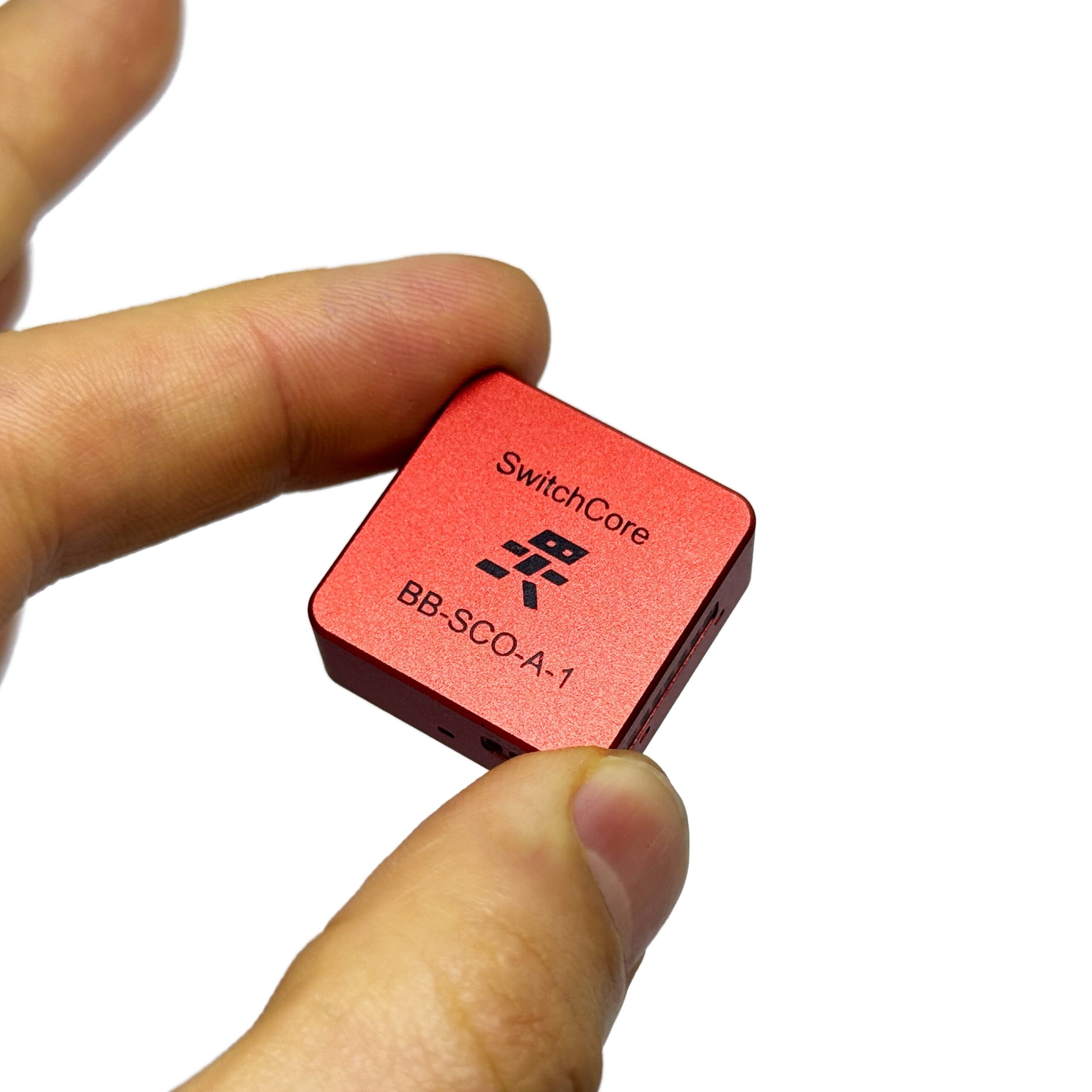
Meet SwitchCore (Source: BotBlox)
I’ll be waffling more about Josh, BotBlox, and SwitchCore in a future column. The reason I mention it here is that, during our conversation, Josh noted that the guys and gals at BotBlox were in the process of bringing their printed circuit board (PCB) assembly in-house.
Just to ensure we’re all tap-dancing to the same skirl of the bagpipes, PCB fabrication is the process of making the bare printed circuit board itself; this typically involves a flat board made of fiberglass (FR-4) or another substrate, with copper traces, pads, and holes that will later hold components. By comparison, PCB assembly (PCBA) is the stage where electronic components are mounted onto the fabricated PCB to create a working circuit.
I always think it’s also a good idea to know where we’ve come from to understand where we’re heading. From the 1950s through the 1970s, electronics firms tended to do everything under one roof: design, PCB fabrication, PCB assembly, PCB testing, and even packaging and shipping. Companies like IBM, Hewlett-Packard, Tektronix, Motorola, RCA, DEC, and Philips all had their own board shops, component insertion lines, and soldering departments. This made sense at the time because electronics was still a relatively small, specialized industry, boards employed simple through-hole component-mounting technology, supply chains were immature, and there simply weren’t any independent Electronics Manufacturing Services (EMS) companies for things to be outsourced to.
The 1980s and 1990s brought major transitions. Miniaturization and multilayer PCBs made fabrication and assembly much more demanding; surface-mount technology (SMT) arrived, requiring precise solder paste printing, pick-and-place machines, and reflow ovens; and the personal computer revolution created huge demand for electronics. Meanwhile, Asia (especially Japan, later Taiwan, China, and Vietnam) ramped up large-scale, low-cost manufacturing. All of this made it increasingly expensive and inefficient for OEMs (original equipment manufacturers) to keep PCB fabrication and assembly lines in-house. It also meant that a lot of our manufacturing capability and capacity headed offshore.
Today, most electronics companies outsource PCB fabrication rather than doing it themselves. There are many reasons for this, including the fact that manufacturing bare PCBs requires expensive, specialized equipment coupled with deep expertise. As PCBs have become increasingly complex—with finer traces, thinner dielectrics, and tighter tolerances—it’s more efficient to rely on specialists who build boards all day, every day. As a result, PCB fabrication is almost always outsourced, and only very large or specialized firms (military, aerospace, or semiconductor equipment makers) maintain limited in-house capability.
PCB assembly sits at the intersection between design and manufacturing, and the outsourcing picture is a bit more nuanced than with bare PCB fabrication. Just like PCB fabrication, most electronics companies outsource their assembly to contract manufacturers or EMS providers, but there are exceptions. Companies keep assembly in-house when they need rapid prototyping or low-volume builds (e.g., engineering labs and startups); security for proprietary or sensitive designs (e.g., defense, aerospace, medical); tight IP control (e.g., secret firmware flashed during assembly); specialized processes (e.g., selective soldering, conformal coating, or underfill); and quality control or reliability testing integrated with assembly. In these cases, a small in-house SMT line—maybe one stencil printer for solder paste, one pick-and-place machine, and one reflow oven—is practical.
Many companies use a hybrid approach in which prototypes and small batches are assembled in-house, while volume production is outsourced to a regional or overseas EMS partner.
Returning to “the interconnectedness of all things,” one of my roles is to act as Editor-in-Chief for Designing Electronics North America (DENA) magazine. You can only imagine my surprise and delight, shortly following my chat with Josh, to discover that one of the stories crossing my desk for the January-February 2026 issue of DENA involves a company called Private Island Networks.
This Florida-based concern develops advanced networking and video processing systems for defense, infrastructure, and other security-conscious markets. This work demands rapid prototyping and frequent iteration. Sad to relate, traditional contract manufacturing couldn’t keep pace. Outsourcing often requires minimum order quantities far higher than the company’s needs, with lead times stretching weeks or months, which is unacceptable when high-priority customers require new versions of the hardware within days. As a result, the folks at Private Island Networks decided to set up their own in-house SMT PCBA line, which allows them to offer a quick-turn design and build service of high-quality prototypes and low-volume production systems.
In turn, this led me to a chat with John Malboeuf, who is the Vice President of Global Sales at DDM Novastar. This is the company that designed, built, and deployed the PCBA machines used to power the Private Island Networks SMT PCBA line.
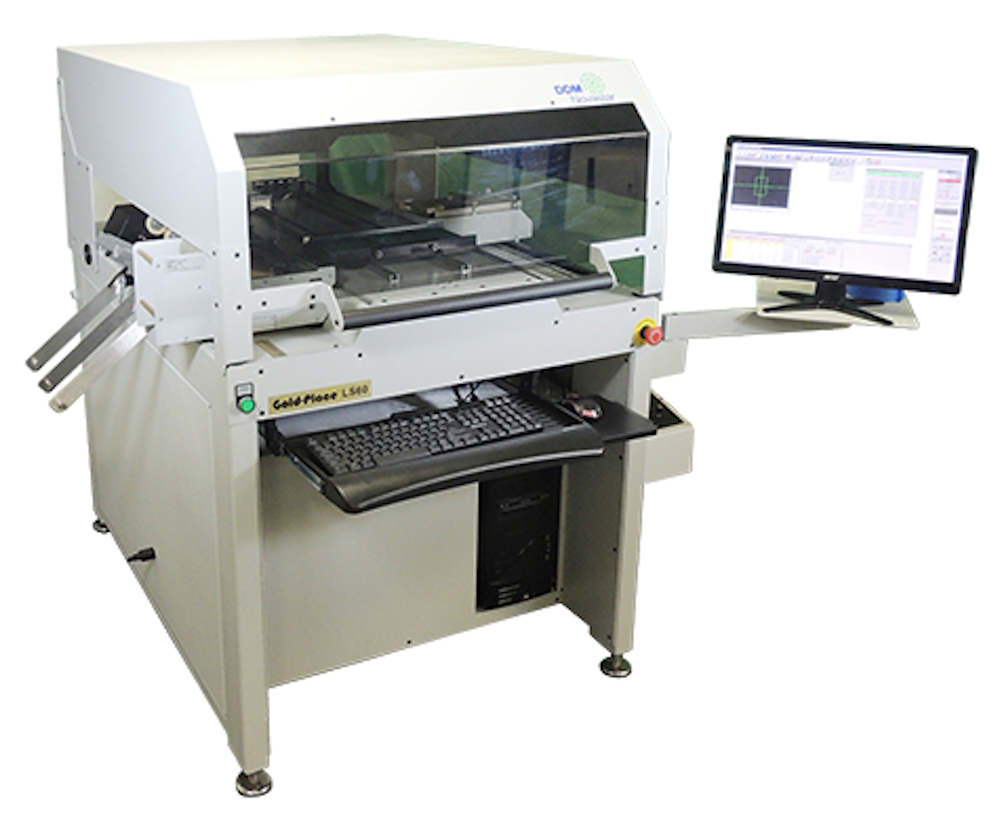
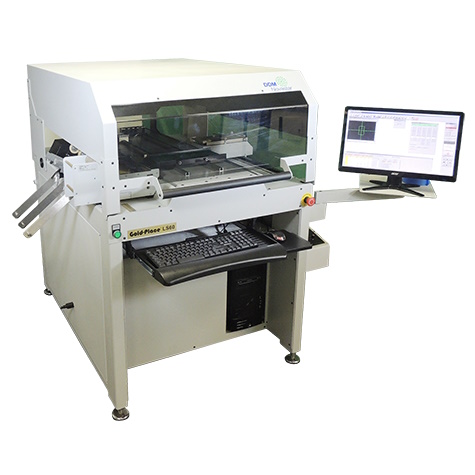
Meet the LS60V pick-and-place machine with vision (Source: DDM Novastar)
DDM Novastar offers a full suite of equipment tailored for SMT board assembly, especially for prototyping and low- to medium-volume production. Key capabilities include stencil printers (manual, semi-automated, and fully automated) for accurate solder-paste deposition, pick-and-place machines (benchtop to floor models), reflow ovens, and inspection and ancillary equipment, such as PCB inspection systems, vision assist for stencil alignment, conformal coating systems, etc.
In addition to their SMT-centric offerings, the folks at DDM Novastar also support boards and products that incorporate through-hole or mixed technologies, including wave solder machines, selective soldering systems, solder fountains/rework stations, component counters, and lead formers.
The chaps and chapesses at DDM Novastar also emphasize their ability to create custom equipment design when standard machines don’t meet a customer’s special requirements. They have the in-house capability to design and build custom pick-and-place applications, custom line configurations, and special part handling (odd shapes, large panels, LED strips, etc.). In fact, they position themselves as one of the few US-based manufacturers able to offer both off-the-shelf and customized assembly equipment for low-to-medium volume users.
Where DDM scores—where their machines are most used—is in prototyping and small to medium production runs, especially when coupled with a need for rapid turnaround and/or security. There’s also the fact that all DDM’s machines are designed and manufactured in the USA. In fact, John says that 90% of DDM’s supply chain is within a couple of hundred-mile radius of their manufacturing facility in the greater Philadelphia area.
So, is it time to bring PCB assembly back in-house? For many organizations—especially those chasing agility, confidentiality, and control—the answer is a resounding “Yes!” Thanks to companies like DDM Novastar, the barriers that once confined advanced SMT production to massive offshore factories have all but vanished. Today’s compact, precise, and fully integrated systems put professional-grade assembly capability within reach of innovators of every size—from nimble startups to security-conscious behemoths.
If Dirk Gently were here, he’d smile knowingly and remind us that it’s all connected: the tools, the timing, the technology, and the opportunity. All of which has given me an urge to reread Dirk Gently’s Holistic Detective Agency and The Long Dark Tea-Time of the Soul. While I’m doing so, do you have any thoughts you’d care to share on any of this?







Thank you for the great article Max and mentioning our company Private Island Networks. Since bringing manufacturing in house a few years ago, we have never looked back. In addition to the advantages you mentioned, we proceed with confidence that each device we specify is actually used on our boards since we control our inventory and procurement process. Also, it is a game changer to be able to create new PCB artwork and manufacture the design in the same week using a trusted process that produces a working board on first power up. Regarding DDM, these are people that we have come to trust for solid advice and great tech support. And there are few things more satisfying in business than buying a high quality product that was made in the USA.
“…we proceed with confidence that each device we specify is actually used on our boards …”
That’s a good point — did you see my column on Cybord (https://www.eejournal.com/article/ai-based-pcba-machine-vision-solution-ensures-supply-chain-integrity/)?
That company was founded by someone who almost lost a billion-dollar deal because his manufacturer had substituted old ceramic capacitors that started failing in the field.