feature article
Subscribe Now

MOST Forum 2010 Announces Program Highlights

Starnberg (Germany) 16 February 2010 – The MOST Forum is pleased to announce a very promising program for this second international conference and exhibition on 23 March 2010 in Frankfurt (Germany). The presentations will offer an insight into the latest and future MOST® (Media Oriented Systems Transport) Technology solutions and studies covering a broad field of topics with a wide range of information. In his keynote speech, Mr. Jens Koetz of Audi AG will present the development and production launch of MOST150 from an OEM’s perspective. “Attendees may look forward to several pioneering announcements and study results,” states Dr. Wolfgang Bott, Technical Coordinator of the MOST Cooperation. “As knowledge partner, the MOST Cooperation encourages all infotainment and networking experts to attend this international conference and exhibition. Top professionals from the automotive electronics industry and academia will exchange information and results of their recent work on this widely used infotainment networking technology.” The broad audience will reach from researchers, designers, engineers, system developers, to purchasers and journalists, and to the managers of the industries involved.

Conference Program

After opening the conference and welcoming the attendees, Henry Muyshondt, Technical Liaison of the MOST Cooperation, will guide the program, starting with the keynote speech “Development and Production Launch of MOST150 from an OEM’s Perspective” by Jens Koetz of Audi. During the first section, the presenters will take a close look at the MOST Physical Layer. The presentations will be by the University of Applied Science Aalen, Harman/Becker, the Research Center for Information Technology (FZI), Ruetz System Solutions, and Toyoda Gosei. During the lunch and networking break all attendees and speakers are welcome to the exhibition area to learn about available MOST solutions and latest vehicle models with MOST inside. The afternoon events will begin with a section on MOST Modelling and Simulation aspects presented by FZI, Jaguar, TUEV Nord, the University of Hagen, and the University of Warwick. After the afternoon networking and exhibition break the section on MOST Network and System Architecture will round up the conference program. Representatives of Audi, Continental, Daimler, K2L, Nestgroup, SMSC, and Volkswagen will report on achievements and give an outlook on their plans for the near future.

Exhibition

In the exhibition area various companies will present their innovative MOST solutions and applications. Amongst the exhibitors will be the MOST Cooperation demonstrating the wide range of use and applications that MOST150 supports. Further exhibits will be by AUDI AG, Avago Technologies, BMW Group, Daimler AG, Dension Audio Systems, GADV, ICT Software Engineering, K2L, Ruetz System Solutions, SMSC, TOYODA GOSEI, Vector Informatik, and others.

Industry partners SAE International (Society of Automotive Engineering, www.sae.org) and ZVEI (Electrical and Electronic Manufacturers’ Association, www.zvei.org) as well as the media partners Auto Electronics (www.autoelectronics.com), Elektronik automotive (www.elektroniknet.de) and ElektronikPraxis (www.elektronikpraxis.de) joined the MOST Forum program committee to set up this premier conference program.


Leave a Reply

Tanner EDA and Sound Design Technologies Announce Process Design Kit (PDK) Collaboration for Thin Film Technologies

MONROVIA, California and BURLINGTON, Ontario, Canada — February 16, 2010 – Tanner EDA, the catalyst for innovation for the design, layout and verification of analog and mixed-signal integrated circuits (ICs) and Sound Design Technologies (SDT), a leading designer and manufacturer of integrated passives and stacked-die assemblies, are collaborating to develop process design kits (PDKs) for analog/mixed-signal (A/MS) designers using Tanner EDA’s HiPer Silicon™ software. This collaboration gives Tanner EDA customers access to SDT’s innovative SiPArray™  integrated passives technology and SDT customers access to Tanner EDA’s A/MS tools for a complete IC design solution.

“Tanner EDA offers a perfect blend of productivity, price-performance and interoperability that is ideally suited to the needs of our analog/mixed-signal IC design customers,” stated Ian Roane, president and CEO of Sound Design Technologies. “Our collaboration with Tanner EDA provides our mutual customers with an advanced design platform and powerful design capabilities to integrate passive components into stacked die assemblies to reduce board space. This will enable them to capitalize on advanced 3D packaging capabilities for breakthroughs in miniaturization and high performance solutions.”

“Our collaboration with Sound Design Technologies is another example of enabling innovation by bringing leading-edge process and packaging capability to our customers,” commented Tanner EDA’s president, Greg Lebsack. “Our specialized IC design software combined with SDT’s integrated passives and chip-stacking technologies arm A/MS designers with breakthrough capabilities to simultaneously save space, improve quality and reduce power requirements.”

Availability of PDKs

Sound Design Technologies’ PDKs for Tanner Tools will be available in Q1 2010. For more information on PDK availability and access, please contact SDT’s Technology and Manufacturing services (techservices@sounddes.com) or John Zuk, vice president, marketing and strategic partnerships at Tanner EDA (john.zuk@tannereda.com).

About Tanner EDA

Tanner EDA provides a complete line of software solutions that catalyze innovation for the design, layout and verification of analog and mixed-signal (A/MS) integrated circuits (ICs). Customers are creating breakthrough applications in areas such as power management, displays and imaging, automotive, consumer electronics, life sciences, and RF devices. A low learning curve, high interoperability, and a powerful user interface improve design team productivity and enable a low total cost of ownership (TCO). Capability and performance are matched by low support requirements and high support capability as well as an ecosystem of partners that bring advanced capabilities to A/MS designs.

Founded in 1988, Tanner EDA solutions deliver just the right mixture of features, functionality and usability. The company has shipped over 33,000 licenses of its software to more than 5,000 customers in 67 countries.

About Sound Design Technologies

Sound Design Technologies Ltd., based in BurlingtonOntarioCanada, is a leading provider of miniature microelectronics manufacturing and packaging techniques as well as ultra-low power digital signal processors (DSP). Previously a division of Gennum Corporation, SDT has a 35-year history of innovation in the area, with a broad array of technologies such as 3D Chip Stacking and high density SiPArray(TM) – Thin Film high density Capacitor Arrays, adaptable for integrated passive device applications, to provide the right packaging solution for each customer’s unique needs. Originally developed for hearing aids, SDT’s products and technologies today are deployed in numerous markets and applications worldwide, including biomedical & industrial sensors, blood analyzers, LED/industrial lighting and wireless monitors. For more information on SDT products and services, visit www.sounddesigntechnologies.com . SDT is a portfolio company of Global Equity Capital, LLC, headquartered in BoulderColorado. For more information, visitwww.globalequitycap.com .

Leave a Reply

Semiconductor Vendors Collaborate to Promote a Full 3GPP-LTE Interoperability Development Testing (IODT) Environment

BARCELONA, Spain, Feb. 16 /PRNewswire/ — Altair Semiconductor, a 4G chip company developing the world’s most advanced mobile semiconductors for handheld devices; Texas Instruments, and Wintegra, a leader in system components for base stations have collaborated with other system partners to create an end-to-end LTE base station and mobile Interoperability Development Testing (IODT) platform. The IODT platform allows for the rapid development and testing of systems and subsystems based on components from these and other vendors.

The IODT platform supports a Gigabit S1/X2 backhaul interface from the Evolved Packet Core (EPC) into an eNodeB uTCA chassis. A Common Public Radio Interface (CPRI) connects to a Remote Radio Head (RRH). An air interface from the RRH to an Altair Semiconductor-based LTE USB ExpressCard UE provides full streaming connectivity from the EPC to the mobile user. The platform provides base station and terminal vendors with all the elements for test and verification of Next Generation LTE designs.

Base Station Transceiver (BTS) control and transport software together with backhaul and air interface security support runs on a Wintegra WinPath3 processor. LTE Layer 1 PHY processing is supported on Texas Instruments TCI6487 multi-core DSPs and Xilinx Virtex-5 FPGAs. Layer 1 PHY software from Tata Elxsi is running on the TI DSP’s and supports a full uplink and downlink processing chain.

The air interface on the UE side incorporates a complete L1 and protocol stack by Altair, running over a FourGee™-3100/6200 LTE Category-3 baseband/RFIC chipset.

“There is significant industry discussion at the moment about how to best provide end users with optimal coverage and how this can be achieved in a Heterogeneous Network that combines a mix of macros, picos, femtos and relays in the same spectrum,” said Colin Alexander, Director of Wireless Marketing for Wintegra. “Providing a low-latency platform complete with Air Interface IODT capability will let vendors stress their systems and help rapid deployment of, for example, a new series of small cell Pico LTE base station equipment that could offload data from overloaded macro-based networks.”

“Being able to demonstrate the power and flexibility of TI’s DSPs when combined into a full reference implementation offers great value to our end customers,” said Arnon Friedmann, strategic marketing director at Texas Instruments. “Many developers are creating designs to support the requirements of LTE and LTE-Advanced and the availability of an operational IODT platform can speed their development process.”

“Taking part in this end-to-end system is an important step in demonstrating the maturity of our LTE UE solution, the FourGee™ LTE USB ExpressCard UE,” said Eran Eshed, Co-Founder and VP of Marketing and Business Development at Altair. “Most of the IOT work we had performed to date was air-interface centric, so this work as part of a comprehensive ecosystem of network components stresses and proves another important aspect in our product.”

About Wintegra

Wintegra is a leading provider of access processing semiconductors enabling the delivery of new services for the evolving communications network infrastructure. Wintegra-based solutions are used in a wide range of networking and communication platforms such as wire-line and wireless infrastructure, and access routers and are used by many of the leading equipment manufacturers worldwide. For more information, visit www.wintegra.com.

About Altair Semiconductor

Altair Semiconductor is the world’s leading developer of ultra-low power, small footprint and high performance 4G semiconductors. The company’s products provide device manufacturers integrating any 4G technology into their products with a highly power-optimized, robust and cost-effective solution. Altair’s comprehensive product portfolio includes baseband processors, multi-band RF transceivers for both FDD and TDD bands, and a range of reference hardware and product level protocol stack software. Based on a novel, proprietary Software Defined Radio (SDR) processor, codenamed “O2P™”, Altair’s products are the smallest and most highly power optimized in the industry, offering an unmatched combination of flexibility and performance. Altair is privately held and has raised a total of $48M in three rounds of financing from investors, including Bessemer Venture Partners, BRM Capital, ETV Capital, Giza Venture Capital, Jerusalem Venture Partners, and Pacific Technology Fund.

Leave a Reply

featured blogs
Dec 8, 2025
If you're yearning for a project that reconnects you with the roots of our digital age, grab a soldering iron and prepare to party like it's 1979!...

featured news

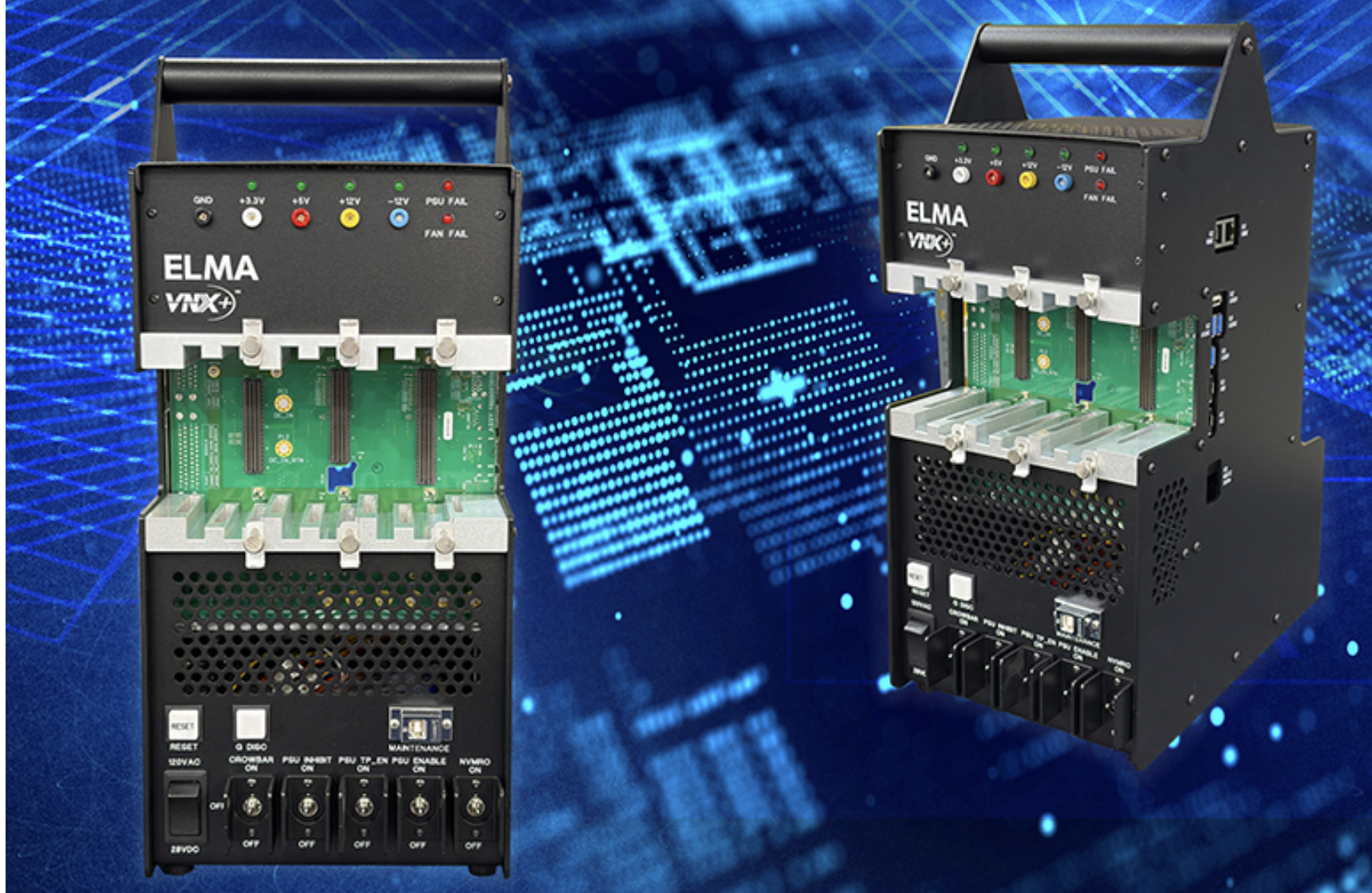
Need Faster VNX+ Development? Elma Just Built the First Lab Platform for It

Sponsored by Elma Electronic

Struggling to evaluate VNX+ modules or build early prototypes? Elma Electronic’s new 3-slot FlexVNX+ dev chassis streamlines bring-up, testing, and system integration for VNX+ payload cards—SOSA-aligned, lab-ready, and built for fast time-to-market.

Click here to read more

featured chalk talk

Data Center Solutions
Sponsored by Mouser Electronics and Microchip
In this episode of Chalk Talk, Josue Navarro from Microchip Technologies and Amelia Dalton investigate the biggest challenges of AI servers and the benefits that power modules can bring to these types of designs. They also explore the roles that energy efficiency, power density, thermal management, and security play in the AI server applications and how you can take advantage of Microchip solutions for your next AI server design.
Dec 8, 2025
8,468 views