feature article
Subscribe Now

Cortus APS3 CPU family now has full support from Lauterbach TRACE32 Power Tools

February 9 2010 – Lauterbach and Cortus are pleased to announce that the Lauterbach TRACE32® Power Tools now fully support the Cortus APS3 family of processors.

The power of Lauterbach’s TRACE32 Power Tools is now available for the Cortus APS3 family of ultra low power embedded CPUs. Non-intrusive debugging over JTAG is supported giving engineers full visibility of program execution and profiling analysis enhancing product development times. It offers full support for the Cortus On-Chip debugging hardware and all processor features.

Lauterbach’s TRACE32 PowerDebug for the Cortus APS3 family of processors provides an ultra-high-speed interface accelerating the entire debug process including code download, flash programming and source code debugging. The tools can be connected to either Windows or Linux hosts via USB 2.0 or Ethernet 10/100/1000. The TRACE32 PowerView software includes a very efficient and user friendly HLL debugger for C and C++ as well as awareness for real-time operating systems.

The Cortus APS3 processor family are designed specifically for embedded systems. They feature a tiny silicon footprint (the same size as an 8051), very low power consumption, high code density and high performance. The ecosystem around the APS3 is rich and well developed, it includes a full development environment (for C and C++), peripherals typical of embedded systems, bus bridges to ensure easy interfacing to other IP and system support and functions such as cache and memory management units. For the most demanding designs the APS3 can be used in a multi-core configuration. The APS3 processor core is currently in production in a range of products from security applications to ultra low power RF designs.

About Lauterbach

Lauterbach is the world’s leading manufacturer of complete, modular microprocessor development tools with 30 years experience in the field of embedded designs. It is an international, well established company with blue chip customers in every corner of the globe and has a close working relationship with all semiconductor manufacturers. Besides the Headquarters in Hoehenkirchen, Germany, the company has its own branch offices in United Kingdom, Italy, France, on the East and West coasts of the United States, Japan and China. Highly qualified sales and support engineers are also available in many other countries. 

About Cortus S.A.:

Cortus S.A. is the price/performance leader for 32 bit processor IP for embedded systems. Cortus cores are used in applications where one or more of small silicon footprint, low power consumption, good code density/small code memory size and high performance are important. 
http://www.cortus.com

Leave a Reply

mimoOn demonstrates LTE for pico base stations based on Texas Instruments’ DSPs at Mobile World Congress 2010

Duisburg, Germany – 9 February, 2010 – mimoOn, a pioneer in LTE software implementation for programmable radio platforms, announced that it will be demonstrating LTE for pico base stations at Mobile World Congress (MWC) in Barcelona next week.  mimoOn will showcase its advanced LTE PHY implementation running on TI’s DSPs, February 15-18, 2010, in the mimoOn booth 2B17 at MWC.

mimoOn’s mi!PicoPHY™ base station software has been integrated on TI’s TMS320TCI648x highly flexible, scalable processors targeting LTE products.  The fully featured PHY software is certified based on the latest versions of the 3GPP standards.  It is modular and written in ANSI-C language, which allows flexibility and scalability with advanced algorithms such as high-performance channel estimators and MIMO detectors.  In addition, the mi!PicoPHY™ is designed for low memory and power consumption which are critical design requirements for small form factor base stations.  TI’s C648x series of DSPs offer equipment manufacturers the advantages of design and code reuse, since the processors can be scaled to meet both the intensive processing demands of macro base stations, as well as the cost constraints of the residential femtocell.

According to Thomas Kaiser, CEO of mimoOn, “As we enter 2010, we’re observing numerous trials globally and increasing numbers of base station shipments for LTE. mimoOn’s offering with TI allows customers to benefit from advanced signal processing, industry leading processors, and market scalability all in the same package.”

“The pre-integration of the mimoOn’s mi!PicoPHY™ LTE software onto TI’s field proven wireless base station processors allows customers to get to market quickly and reliably in the rapidly evolving Pico LTE space,” said Kathy Brown, business manager, wireless base station infrastructure business, Texas Instruments.

Contact info@mimoon.de for an appointment at MWC, Barcelona,
February 15-18, 2010.

About mimoOn

mimoOn GmbH is the LTE pioneer in end-to-end software implementation and system design on SDR platforms. The company’s scalable and modular 3GPP LTE infrastructure software families “mi!Femto™ & mi!Pico™” and terminal software family “mi!Mobile™” allows equipment manufacturers to fully exploit the numerous benefits of SDR. mimoOn’s pre-certified Physical Layer (PHY) and Protocol Stack (MAC, PDCP, RLC, and RRC) software packages assure fast time to market, conformance to the latest release of the standards, ease of integration, and design to the lowest BoM. Thanks to SDR, mimoOn’s LTE hardware product “mi!TestMOBILE™” delivers an affordable, highly flexible, portable test device enabling a reduction in CAPEX and OPEX for OEMs & network operators.

Due to the team’s strong background from tier 1 mobile phone manufacturers and the company’s ongoing research at leading-edge academic institutions, mimoOn is able to provide highly innovative solutions to the cellular industry. The company has been voted into EE Times annual list of Emerging Startups and also listed as one of Germany’s most promising High-Tech companies. Visitwww.mimoOn.de

Leave a Reply

Treck Releases High Performance TCP/IP Stack Implementation for the Xilinx Spartan-6 FPGA Embedded Platform

CINCINNATI, Feb. 8 /PRNewswire/ — Treck, a leading provider of embedded Internet protocols, has announced the availability of their new high performance networking reference design for the Xilinx Spartan®-6 FPGA Embedded Platform that includes the SP605 board. The new MicroBlaze™ soft processor-based implementation of the Treck TCP/IP stack achieves upwards of 475 Mbps TCP payload throughput on a Gigabit Ethernet link. This performance is facilitated by zero-copy Treck stack implementation and the Spartan-6 FPGA which includes a hard memory controller that supports DDR3 memory interface at 800Mbps.

Treck provides demos including support for using the Treck TCP/IP stack in both standalone mode and in a multi-threaded environment with XilKernel. The demo software suite includes UDP throughput testing and examples of Treck’s HTTP server, FTP server, Telnet server, and SNMP agent demo.

For more information and a link to download the demo, please visit http://www.treck.com/xilinx.html 

“Treck’s high performance and reliable TCP/IP protocol stack allows our customers to fully utilize the Tri-Mode Ethernet MAC IP and hardware capacity present in Xilinx FPGAs. If you are looking for a TCP/IP stack to maximize your network throughput, Treck TCP/IP is a good fit,” says Brent Przybus, Director of Platform Marketing at Xilinx.

About Treck Incorporated:

Founded in 1997, Treck, Inc. designs, distributes and supports IPv4 and IPv6 solutions and related real-time embedded Internet protocols for worldwide technology leaders. Treck protocols are built from the ground up specifically for the unique requirements of embedded systems. For a list of Treck products, please visit http://www.treck.com/.

If you would like to receive more information, please call 513-528-5732 or e-mail sales@treck.com 

Leave a Reply

Treck Releases High Performance TCP/IP Stack Implementation for the Xilinx Spartan-6 FPGA Embedded Platform

CINCINNATI, Feb. 8 /PRNewswire/ — Treck, a leading provider of embedded Internet protocols, has announced the availability of their new high performance networking reference design for the Xilinx Spartan®-6 FPGA Embedded Platform that includes the SP605 board. The new MicroBlaze™ soft processor-based implementation of the Treck TCP/IP stack achieves upwards of 475 Mbps TCP payload throughput on a Gigabit Ethernet link. This performance is facilitated by zero-copy Treck stack implementation and the Spartan-6 FPGA which includes a hard memory controller that supports DDR3 memory interface at 800Mbps.

Treck provides demos including support for using the Treck TCP/IP stack in both standalone mode and in a multi-threaded environment with XilKernel. The demo software suite includes UDP throughput testing and examples of Treck’s HTTP server, FTP server, Telnet server, and SNMP agent demo.

For more information and a link to download the demo, please visit http://www.treck.com/xilinx.html 

“Treck’s high performance and reliable TCP/IP protocol stack allows our customers to fully utilize the Tri-Mode Ethernet MAC IP and hardware capacity present in Xilinx FPGAs. If you are looking for a TCP/IP stack to maximize your network throughput, Treck TCP/IP is a good fit,” says Brent Przybus, Director of Platform Marketing at Xilinx.

About Treck Incorporated:

Founded in 1997, Treck, Inc. designs, distributes and supports IPv4 and IPv6 solutions and related real-time embedded Internet protocols for worldwide technology leaders. Treck protocols are built from the ground up specifically for the unique requirements of embedded systems. For a list of Treck products, please visit http://www.treck.com/.

If you would like to receive more information, please call 513-528-5732 or e-mail sales@treck.com 

Leave a Reply

featured blogs
Dec 8, 2025
If you're yearning for a project that reconnects you with the roots of our digital age, grab a soldering iron and prepare to party like it's 1979!...

featured news

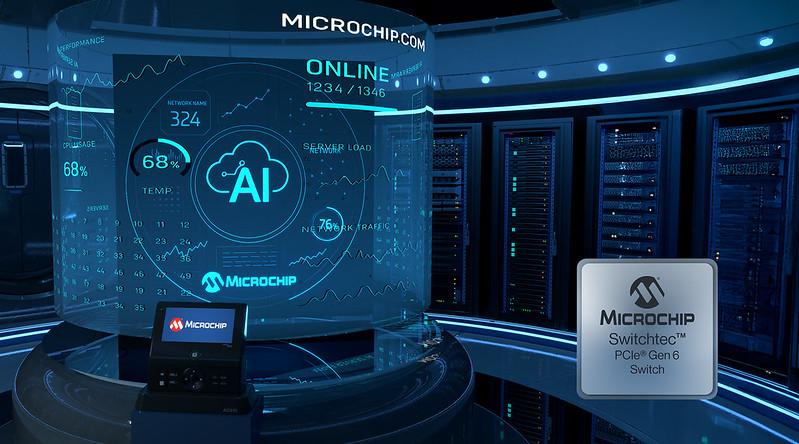
Microchip Unveils First 3 nm PCIe® Gen 6 Switch to Power Modern AI Infrastructure

Sponsored by Microchip

AI systems are starving for bandwidth. Microchip’s 3 nm Switchtec™ Gen 6 PCIe® switches deliver up to 160 lanes, lower power, and CNSA-compliant security—built for the future of AI and cloud infrastructure.

Click here to read more

featured chalk talk

New Infineon Microcontrollers offering PSOC™ HVMS + Vector Microsar Software
Sponsored by Infineon
In this episode of Chalk Talk, Marcelo Williams Silva from Infineon and Amelia Dalton explore how electrification, autonomy and connectivity are pushing a need for low power microcontroller solutions for automotive applications. They also investigate the benefits that the Infineon PSOC™ 4 HVMS MCUs bring to these kinds of designs, and how you can take advantage of Infineon’s robust automotive ecosystem of solutions for your next design. 
Nov 13, 2025
52,761 views